
“Hot Milk”, brings the heat
Deborah Levy’s dreamlike mother-daughter drama takes to the big screen.
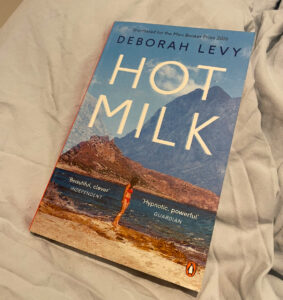
Image courtesy of Phoebe Ward
Oscar-winning screenwriter Rebecca Lenkiewicz makes a bold, impressionistic directorial debut with Hot Milk, an adaptation of Deborah Levy’s hallucinatory novel about the sometimes burdensome relationship between mothers and daughters. Set in a sunburnt coastal village in southern Spain, the film follows Sofia, a young woman who’s suspended her life to care for her mysteriously ill mother, Rose. What unfolds is not so much a traditional narrative as a sensory and emotional unraveling, a journey laced with longing, absurdity, and sunstroke.
Early reactions to the trailer have lit up Gen Z audiences online. On a Tiktok teasing the teasing the film one viewer commented “WLW (women loving women), mummy issues, call me by your name?” and another commented “this means everything to me”. While the comparisons are surface level, the Spanish sun, the dreamy score, the loneliness of becoming, what connects these works is emotional climate and young people wading through the intensity of connection, desire, and freedom, all under a heat that makes everything feel slightly unreal.
At the center is Emma Mackey, best known to many, for her breakout role as Maeve in Netflix’s Sex Education (2019) and her role in Death on the Nile (2022). With each new role, Mackey is carving out a path as one of her generation’s most intriguing and emotionally intelligent actors. As Sofia, she delivers a performance of quiet frustration and curiosity, playing a young woman caught between resentment and devotion. The role marks a decisive move away from the whip-smart teen archetype that launched her career and toward something more avant-garde.

Image courtesy of Flickr
Fiona Shaw plays Rose with equal mystery and menace, never revealing whether her illness is real or strategic, or perhaps something more metaphysical. This is deepened, by the film’s dreamlike pacing and script, which captures the spirit of Levy’s prose. The book is whimsical in the most literary sense, with every sentence is a provocation, every moment charged with unreliability and surreal humor. Lenkiewicz leans into that tone rather than sand it down for screen, resulting in a film that feels disjointed in all the right ways.
In Hot Milk, Sofia’s time in Spain becomes more than a temporary escape. It’s a recalibration of identity. As she interacts with a surreal cast of locals, including the enigmatic Ingrid, played by Vicky Krieps. She begins to confront not just her relationship with her mother, but also her own unrealised hunger for independence, sensuality, and meaning. Each character she encounters is offbeat and a little bit magical mirroring the novel’s absurdist streak and offering glimpses of a world outside the rigid caretaking role she’s inhabited for too long.
Shot on location with a washed-out, bleached palette, clips of the film capture the strange lethargy of heat and the slow disorientation of emotional co-dependence. Lenkiewicz, long praised for her precise, character-driven screenplays, let’s go of narrative rigidity and instead crafts a mood piece where atmosphere is everything.
Hot Milk is about the invisible labor of caregiving, about love that turns into obligation, and the murky power dynamics that live inside even the most intimate bonds. For some, that may feel uncomfortable or unresolved. For many, especially younger viewers, it reflects emotional realities they’re familiar with.
As the film nears its summer release, it promises to be one of the year’s most divisive and talked-about dramas.