5 French female directors, you should know about
Discover the French women behind some of cinema’s most authentic films.
I grew up in a small French village beside a nearly empty cinema, often having the whole theatre to myself. Immersed in French films, I was captivated by their artistry. French cinema emphasises visual composition, lighting, and colour, creating world of escape. It prioritises character and emotional depth over action, offering nuanced performances. Storytelling is often innovative, blending genres and structures. Influenced by theNouvelle Vague, it embraces personal and experimental filmmaking.
These five French female directors that have altered my brain chemistry when it comes to the world of cinema. They embrace themes of love, philosophy, and everyday beauty, creating powerful and intellectually rich pieces of film.
Agnès Varda
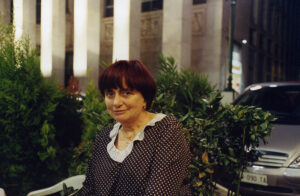
Image of Agnès Varda, courtesy of Flickr
Often considered the “grandmother of the French New Wave,” Varda was a pioneer in every sense. Born in Belgium in 1928, she was one of the few women at the forefront of the Nouvelle Vague, crafting films that blended documentary and fiction. Her works, such as Cléo from 5 to 7 (1962) and Vagabond (1985), are known for their effortless storytelling and awareness. Her 2017 documentary Faces Places, co-directed with JR, was nominated for an Academy Award. She then received an honorary Palme d’Or in 2015, the first ever awarded to a woman.
Anne Le Ny
Anne Le Ny is a French actress and director whose work focuses on emotional realism and social themes. She starred in The Intouchables (2011) and directed Those Who Remain (2007), a sensitive story about grief and human connection. Le Ny often focuses on ordinary people facing extraordinary emotional circumstances, crafting narratives that are both deeply humane and socially aware. Though not as internationally well-known as some of her contemporaries, her work is a testament to the power of subtle storytelling.
Céline Schiamma
You may not know Schiamma but you would know her work. Emerging as a powerful voice in contemporary French cinema. Her films Tomboy (2011), Portrait of a Lady on Fire (2019), and Petite Maman (2021) explore themes from gender identity to childhood with subtlety. Sciamma’s dedication to authenticity and emotional depth resonates with audiences worldwide, particularly younger generations craving stories outside the male gaze.
Julia Ducournau
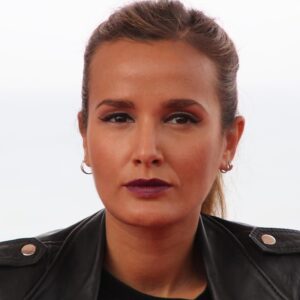
Image of Julia Ducournau, courtesy of Flickr
Julia Ducournau represents another powerful evolution. Her bold, genre-defying films have reimagined what female-led cinema can look like. After her feature debut Raw (2016), a visceral coming-of-age horror story, she shocked the Cannes Film Festival again with Titane (2021), the film everyone associates with the lady that has sex with a car. This film however won the prestigious Palme d’Or; she is only the second woman ever to receive the award.
Mia Hansen-Løve

Image of Mia Hansen-Løve, courtesy of Flickr
Mia Hansen-Løve is known for her introspective and emotional films. She began her career as an actress in Olivier Assayas’s films before moving into directing. Her works, including Things to Come (2016) and Bergman Island (2021), explore themes like personal growth, time, and quiet resilience. Using subtlety and poetic storytelling, she captures life’s emotional turbulance with authenticity and grace. Hansen-Løve captures the beauty in the everyday, offering audiences space to reflect and connect on a personal level.
In a world still reckoning with gender disparities in film, these directors offer not just representation but reimagination. Their voices and innovation are the ones lighting the screen.