
I’m not a clean girl, I’m a messy girl
Messy women on screen aren’t flaws to fix. They’re reflections of real, raw, and complicated lives.
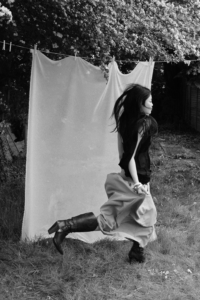
Image courtesy of Imogen Latto
I’m not here to tear down the “clean girls” on social media. The girls with the 10-step skincare routines and slick back buns. I want to see the girl that is chaotic, impulsive, because they’re just as valid. Making morally ambiguous decisions at 3am. I think it’s so important that we witness this form of woman on screen, not because she’s better, but because she’s real, and deserving of representation. It’s about the kind of girl who’s complicated, not as a cliché, but as a genuine, living contradiction.
We’ve all been shown a lot of the mythology of the “clean girl.” She wakes up at 6AM, drinks warm lemon water, probably does Pilates. She seems emotionally stable, graceful and aspirational. But in the cultural shadows of that perfectly dewy archetype, something that is just as important, the ‘messy girl”.
To be messy is to be real, raw, and sometimes unlikable. It’s not just about crying in public or bad decisions, it’s about complexity. It’s about showing women as they are, not how they’re supposed to be. And nowhere is that more sacred than on screen. Look at Skins, Fleabag, and The Worst Person in the World, three pieces of culture that take the manicured mask off and dare to ask what happens when women stop being polite and start being human.
Skins – Chaos in a teenage wasteland
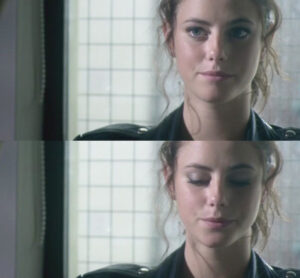
Image courtesy of Flickr
Before Euphoria (2019) got a rhinestone-laced grip on Gen Z, Skins crawled out of the British underground in 2007 and made dysfunction sexy in a way that didn’t feel like a performance. It was shot like a drug-fuelled home movie. The characters were gloriously flawed, morally bent, and magnetic. But more than that, Skins gave us girls like Effy Stonem and Cassie Ainsworth.
Effy, with her coal-smeared eyes and cold silence, conveyed a universe of brokenness. Cassie, on the other hand, floated through life like a fairy with an eating disorder. They were both messes, but not in a tropey, one-dimensional way. Their spirals weren’t glamorised; but it wasn’t hidden either. They were chaotic, destructive and at times hard to watch. Yet, in their imperfection, they offered a strange comfort, proof that being unwell didn’t make you unlovable. It just made you real.
Skins didn’t pretend to offer solutions. It let its characters unravel, hurt each other, self-destruct, and survive. It gave viewers, especially young women, a vocabulary for the contradictions they lived with daily. In doing so, it legitimised the mess.
Fleabag – Breaking the fourth wall and your heart

Image courtesy of Flickr
If Skins was a messy girl in her teens, Fleabag is her grown-up evolution. Phoebe Waller-Bridge’s razor-sharp creation doesn’t just show us a woman falling apart, she invites us inside the collapse.
Fleabag is not a good person. She sleeps with people she shouldn’t, lies to everyone she loves, and uses sarcasm as both shield and sword. She is horny, hilarious, and haunted. And her mess isn’t aesthetic, it’s spiritual. Watching her talk directly to us, often mid-breakdown or orgasm, is an almost holy intimacy. It’s confessional, but not apologetic.
In Fleabag, the fourth wall isn’t just a gimmick. It’s a coping mechanism. It’s the audience as mirror, therapist, and co-conspirator. When the cracks show, when the priest notices her looking at us, it’s a punch to the chest. Because in that moment, we’re caught. She’s caught. The performance stops, and the real mess oozes out.
What makes Fleabag revolutionary isn’t that she’s flawed. It’s that she owns it. She doesn’t strive for redemption. She doesn’t tie herself into a neat, clean bow by the end. She simply walks away, grieving, growing, still unfinished.
The Worst Person in the World – The modern existential crisis
Then there’s The Worst Person in the World, Joachim Trier’s 2021 masterpiece that refuses to pick a genre, part romance, part existential spiral, all heartbreak. It follows Julie, a woman in her late 20s who doesn’t know what she wants and admits it.
Julie changes careers on a whim. She leaves her steady, older boyfriend for someone more chaotic, more exciting. She parties, she regrets, she mourns. Through it all, she’s painfully relatable. There’s no villain here, only the quiet ache of indecision. The film doesn’t punish Julie for being uncertain, for making selfish choices. It simply observes her.
The mess in The Worst Person in the World isn’t always loud. Sometimes it’s just silence, a look, a missed connection. It’s a portrait of emotional entropy, the slow burn of becoming someone, and the wreckage left behind in the process.
In Julie, we see the messy girl not as a trope but as an archetype of modern womanhood. She’s the antidote to the productivity-obsessed, self-optimised ideal. Her journey isn’t about getting it right. It’s about existing honestly.
There’s something inherently political about putting messy women on screen. It pushes back against centuries of clean, compliant, and convenient portrayals of femininity. Women weren’t allowed to be complicated. They were either virgins or whores, saints or sinners. But these stories change the narrative for women. When women are allowed to be messy, they’re allowed to be whole. When we see them on screen, we’re reminded that our own chaos isn’t failure, it’s life.
These aren’t role models. They’re reflections. They don’t have to be aspirational to be important. In fact, their lack of perfection is the point. They make space for rage, grief and awkwardness, everything the clean girl pretends to wash away.
Cinema doesn’t just entertain. It informs how we see ourselves and each other. When the only women we see on screen are polished, put-together, and perpetually in control, it teaches us that our mess is a secret, a shame. But when we see Effy lose herself, Fleabag break down, Julie drift, we see our own chaos mirrored and validated.
To be messy is a state of transition, to admit that you don’t have all the answers. And maybe that’s the most honest thing we can be. It’s not a phase, it’s a rite of passage, for many women out there.