6 camera techniques that revolutionised film
They’ve been used in iconic scenes and changed how stories were told; these groundbreaking camera techniques need to be used more.
Image courtesy of Flickr
It’s movie night, and you choose to watch Alfred Hitchcock’s Vertigo. You get to the scene where Jimmy Stewart is chasing Madeline Elster up the bell tower. As he reaches a point the camera looks down over his shoulder, and then the world shifts. The stairs seem to stretch and spiral downward into infinity, as if gravity itself has warped, highlighting Jimmy’s intense fear of heights. Your stomach drops. You feel just as scared of heights as he does. It’s unsettling. Hypnotic. That moment didn’t rely on CGI or visual effects. It came from a simple, brilliant trick of the camera, the Dolly Zoom.
Modern cinema has everything from drones to digital effects; it’s easy to forget that some of the most powerful moments in cinema history came from clever camera work. Filmmakers like Hitchcock, De Palma, and Scorsese didn’t just point and shoot; they controlled the camera in a way that fit their will. The result? Techniques that didn’t just look interesting, they felt like something.
Here are six revolutionary camera techniques that need a comeback.
The Dolly Zoom (aka the Vertigo Effect)
Although the Dolly Zoom was credited to the cinematic mastermind of Alfred Hitchcock in his 1958 classic Vertigo; the Dolly Zoom was actually executed by the second unit cameraman, Irmin Roberts on the set of the iconic film. There was nothing more cinematic than this new technique however Roberts was never credited in the film.
This technique involves the camera zooming in with the lens while moving on a dolly (a wheeled cart that runs on rail track) backwards, or vice versa. This creates a disorienting visual warping effect, often used to mimic anxiety, dread, or realisation. Other examples of the Dolly Zoom being used include, La Haine (1995), Jaws(1975) and Pulp Fiction (1994).
There is nothing more cinematic than the use of a Dolly Zoom, it gives dramatic reveals, but can also be used more subtly in character- driven stories to evoke emotional change without a single line of dialogue.
Low-Angle Tracking Shots
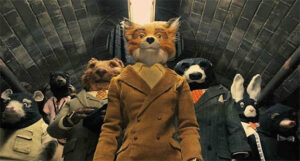
Image courtesy of Flickr
This camera shot might accidentally get stepped on if you’re not careful, the Low Angle Tracking Shot. This process involves the camera angle being positioned anywhere below the eye line, pointing upwards. In some instances, it can be placed bellow a character’s feet and this is called The Extreme Low Angle Shot.
Often used to evoke power in character, however this shot is more malleable as it can also convey vulnerability. Part of this reasoning is because we are focusing on a character in an unusual angle, depending on the context the viewer is likely to feel confined especially if the character is indoors.
Examples films with low angle shots include, The Matrix (1999), The Dark Knight (2008) and Godzilla (1954). There is no better technique to showcase a character that is larger than life.
Split Diopter Shot
You’ve probably seen this technique if you have watched Severance. The hidden gem of shots in cinema is the Split Diopter Shot. This technique involves having two different subjects we can see in focus that are on different focal plains. Also easy to identify if the shot has a blurry line in the middle of the subjects.
This can go a step further and you can find the unicorn of cinema and see the Split Triopter Shot, which instead of having two subjects on different focal point, there are three.
Creating this shot involves a lens, with one half magnifying glass and the other half left empty. This method is an underrated way of creating tension or duality to scene, without cutting between subjects. Most notable in Jaws (1975), Final Destination 3 (2006) to more recently Severance (2022) and Evil Dead Rise (2023).
Crash Zoom
Often used to reveal new information or character the Crash Zoom is a very dramatic technique that slams the viewer into or out of a subject and it elevates the film into unique cinematic experience. It is also identifiable by is comic like usage, such as the Kill Bill series by Quentin Tarantino and Karate movies.
Modern filmmakers often fear looking “campy,” but Crash Zooms are stylised fun. In genre films, mockumentaries, or postmodern cinema, they add a bold, self-aware punch.
Whip Pan (Swish Pan)
Instead of suddenly zooming into a subject like the Crash Zoom, the Whip Pan Shot involves a quick move between two stationary shots, that create a rapid transition. A favourite of Wes Anderson, this shot provides a dramatic emphasis on characters, and used for comedic timing. It can also provide a sense of chaos or show spatial relation between two subjects.
This shot deserves more recognition. Whilst lots of films use this technique today, such as Whiplash (2014), Lalaland (2016), and the Grand Budapest Hotel (2014). It is such a versatile method; with tight editing, whip pans maintain momentum without cuts, making them perfect for visual comedy, fast-paced thrillers, or intriguing montages.
Snorricam (Body-Mounted Camera)
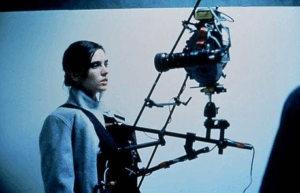
Image courtesy of Flickr
Popularised by Darren Aronofsky’s 2000 film Requiem for a Dream, this shot will leave you feeling a bit nauseous. The Snorricam involves a camera being strapped to the actor, making the shot move with them. Keeping their body centered while the world tilts and shakes around them, you’ll feel uneasy and sick.
As a tool for portraying mental states such panic, drug use, dissociation, it’s unmatched. Indie and horror films especially could use more of this unfiltered perspective as the outcome is so raw and visceral to watch.
While these techniques are hardly new, they remain as potent today as when they first broke onto the screen. In a world saturated with digital effects and CGI, rediscovering the craft of in-camera storytelling puts the creativity back into cinema.