
Hotter, Wiser, Bolder: The cougar trope

Image of Bridget Jones, courtesy of Flickr
From Bridget Jones’ return to indie gems like Babygirl, films at the moment are loving the cougars.
First everyone was talking about Nicole Kidman and Harris Dickinson in Babygirl, written and directed by Halina Reijn, and then people were obsessing over Leo Woodall in the last Bridget Jones movie. Now Gwyneth Paltrow and Timothée Chalamet are about to make their age gap trope debut in the up-and-coming A24 film Marty Supreme set to be released at the end of the year.
So why are we seeing this relationship dynamic in movies? Well, I think this is a good change. It has been long accepted for older men to be in relationships with significantly younger women. Richard Gere was 44 in Pretty Woman (1990) and Julia Roberts was 21!
With an undeniable influence of the female gaze and more women behind the camera and in executive roles, stories are emerging that reflect women’s realities and fantasies, instead of male projections. This perspective focuses more on authenticity over objectification, portraying older women as multifaceted, with desires and highlighting the fact that older women are still attractive to men.
The tired cliché of the older man-younger woman dynamic feels out of touch in an era striving for gender equality and inclusivity. Films that explore older women with younger men offer fresh, relatable content that resonates with viewers who see reflections of their own lives and aspirations.
For decades, Hollywood has unapologetically showcased ageism and sexism championing the trope of older men seducing younger women, embedding this narrative so deeply into its fabric that it became a norm. From Casablanca‘s (1942) Humphrey Bogart and Ingrid Bergman to Autumn in New York‘s (2000) Richard Gere and Winona Ryder, the silver screen has been a parade of “silver foxes” paired with young, innocent women. This continuous relationship not only mirrored but perpetuated a societal double standard…aging men are distinguished, while aging women are dismissed.
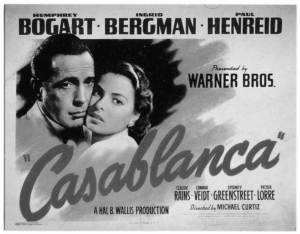
Image courtesy of Flickr
In juxtaposition, when we revisit films that glorified older men with significantly younger women, they now read as relics of a bygone era, one that celebrated male dominance and female subservience.
But beyond simply swapping the dynamic, this trend reveals what modern audiences are hungry for. People want stories that reflect real-life emotional power dynamics, messy, layered, and equal. Society is tired of pretending that women’s worth fades with time. These new films say loudly: older women don’t disappear, they progress. They don’t become invisible, they become more powerful. And they still want connection, intimacy, passion. Why wouldn’t they?
In an Instagram questionnaire, nine people gave their thought on this relationship dynamic, some don’t see a problem “I think it shows that an age gap is completely dependent on the couple” one viewer writes. “Not very common but could be more as there’s so many with the opposite dynamic” writes another. However other don’t like the representation, someone else commented “I think it sets an unrealistic precedent for the danger and reasonings behind men/ women”.
Representation is key today, while some of these movies can be viewed as cringe worthy, it’s interesting when we look at older movies with the gender swap. They were so normalised, however now we bat an eye at older woman falling for a younger man. I’m no longer interested in narratives that act like women over forty have nothing left to say unless they’re mothers or mentors. I’m not here for the quiet fading of female characters. I’m here for characters who fall in love, make mistakes, have sex, swipe right, cry in bathrooms, chase younger men, and do it all while wearing crow’s feet and confidence like a crown.
These films also acknowledge that women aren’t one dimensional. Because for so long, the industry has told women their story peaks in their twenties. But what if the best, juiciest chapters come later?
We’re witnessing a long-overdue narrative correction. In an industry that’s historically obsessed with youth and male fantasy, certain movies at the moment are shaking things up. It’s restoring a balance and creating space for women to be seen not as expired, but exalted. And for men to be drawn to power, not just pliability.