The Modern final girl
Analysing the evolution of the Final Girl in cinematic horror, from survival archetype to empowered protagonist.
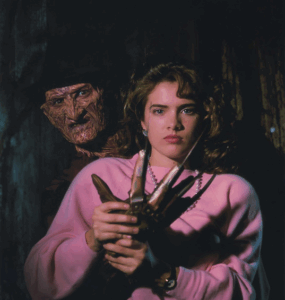
Image courtesy of Flickr
She’s the virgin. She’s cleansed from all evil that follows her. She does no wrong and she’s the only one left after all her friends; the jocks, the slutty cheerleaders, and the stoners are all picked off one by one.
In horror films, the Final Girl trope has long been around, she’s the last woman standing, the one who outlives the killer and the carnage. Look at Laurie Strode in Halloween (1978), Sidney Prescott in Scream (1996), or more recently, Grace in Ready or Not (2019). For decades, she’s been a familiar trope.

Image courtesy of Flickr
Times have changed with the Final girl trope. In the past, she was always quiet, she wasn’t promiscuous or reckless, and most importantly she was pure. Their survival often felt more like a reward for good behavior than a reflection of strength or intelligence. They lived because they were morally “better,” not necessarily because they were more capable.
But that formula has evolved. In horror movies today, the Final Girl is no longer a passive byproduct of someone else’s story, she is the story. She’s no longer just the one who makes it out alive, she’s the one who fights back, takes control, and rewrites the ending.
Take You’re Next (2011), where Erin doesn’t just survive a home invasion, she turns the tables with tactical brilliance and physical strength, after revealing that she grew up on a survivalist camp. One of the iconic final girls in modern day horror is Maxine Minx from the films X (2022) and Maxxxine (2024), part of a horror trilogy written and directed by Ti West. Maxine was written as a very complex character, embracing her sexuality and weponsises it, she is also fueled by her ambition to become a star, and she won’t let anyone get in her way.
As horror journalist Zoë Rose Smith puts it, “The evolution of the final girl is a reflection of how society views women and their strengths. We’ve always seen how the final girls are fighting not only against monsters, demons etc., but also against the stereotypes that have been forced upon them by society, and mostly men.”
That evolution has mirrored broader cultural shifts, particularly around gender roles, power dynamics, and representation. In the 1980s, a character like Nancy Thompson in A Nightmare on Elm Street (1984) felt revolutionary simply for resisting the villain. But today, the bar is higher. Audiences expect more than endurance. They expect depth and agency to the final girl, as well a role model.
“Characters such as Maxine, Dani and Erin are a response to women claiming back their power and not adhering to the ‘standards’ set for them,” Smith continues. “They are far more empowered because they’re not solely portrayed from the male gaze.”
This shift isn’t just about plot devices. It’s about changing the narrative for women in horror. More women and queer creators are stepping behind the camera and writing the scripts. Their work brings lived experience and authenticity to characters that, for decades, were filtered through male perspectives.
“For any repressed part of society, it’s important to see representation and that’s what the final girl has done – it’s become a way for women to claim back their power within horror films.” Says Smith.
That matters. Because for much of horror’s history, the Final Girl wasn’t a fully realised person, she was a symbolic placeholder, a moral compass in a film full of chaos. But now, she’s often the most complex character on screen. Her survival is no longer about what she abstains from; it’s about what she becomes.
Modern horror is also more self-aware. Films like The Cabin in the Woods (2011), dissect and satirise the Final Girl trope itself, calling out the artificiality of her creation and questioning why she was ever expected to be “pure” to survive in the first place.
What we’re witnessing is more than a shift in storytelling. It’s a cultural reckoning. The Final Girl has become a lens through which we explore broader conversations about feminism, trauma, recovery, and resilience. She’s not a symbol of virtue anymore. She’s a symbol of agency.
She represents what it means to confront fear and survive, not because she’s pure, but because she’s human. The Final Girl is no longer just a fixture of horror; she’s a reflection of the women watching, writing, and shaping the genre itself.